

Plank Alternatives are a great way to build a strong core, without forcing yourself through exercises that don’t feel good. If planks hurt your wrists, bother your back, or just feel boring, these exercises are for you. These plank alternatives target your entire core, improve stability, and help you build real strength in a way that actually feels good to do.

A Quick Look At The Exercises
- 🎯 Best For: A strong core without wrist pain, back strain, or plank boredom
- 💪 Exercises Included: 10 alternatives, from deadbugs to loaded carries
- 🏋️ Equipment Needed: Bodyweight for most, a resistance band or Swiss ball for a few
- 🔁 How To Use This: Pick 3–4 and rotate them into your usual core work
- 🧠 Key Takeaway: These aren't easier than planks; they're often more effective
- ⭐ Why You'll Love It: Real core strength that finally feels good to build
SUMMARIZE & SAVE THIS CONTENT ON
When people think of “core muscles” they think of training the abdominals. And most commonly, what comes to mind are planks and sit ups.
However, the core is actually a group of muscles that all work together to stabilize the spine. These muscles connect the upper body and lower body so that the body can move as a whole.
One of the deeper core muscles (the transverse adominis) is the main player in the group of muscles. It is this muscle that needs to be engaged when trying to heal diastasis recti after pregnancy.
And though planks are a wonderful exercise (check out these plank variations for the more advanced or this diastasis recti workout if you're only starting to work on engagement!), there are many plank alternatives too.
Jump To
Alternative Plank Exercises
These exercises target your core in multiple ways (like anti-extension and anti-rotation), making them some of the most effective movements you can do (though these core strengthening exercises for beginners are wonderful too).
They might not look flashy, but they work. Which is why they're staples in my 6-weeks to STRONG workout plan.
The key is to move slowly and with control, focus on proper engagement, not just going through the motions.
And the best part? These aren’t just easier, they’re often more effective for building a strong, functional core.
The Exercises
- Deadbug and deadbug variations
- Bird dog
- Quadruped hold or dumbbell drag
- Eccentric sit up
- Pallof press
- Swiss ball pass
- Loaded carry
- Slider crunch
- Slider pike
- Windmills
Know that not included in this list are a classic side plank and all the variations that come with a side plank.
1. Deadbug & Variations
The most common and effective core exercise of them all is the deadbug. This is one of the corrective exercises for diastasis recti to help in healing abdominal separation.
It is also the base foundation for many of the other plank alternative exercises on this list.
Master the basic deadbug exercise before moving on to its variations.
How to perform a deadbug:
- Lay on your back, bend your knees, and raise your feet into the air.
- Tuck your ribs to your hips so that your low back is pressed firmly on the ground and you feel a slight engagement in the lower abs.
- Very slowly, extend one arm and the opposite leg away from the body. Do not let your low back come off the ground.
- When you feel a stretch in your abs, use that stretch to pull the arm and leg back into the starting position.

2. Bird Dog
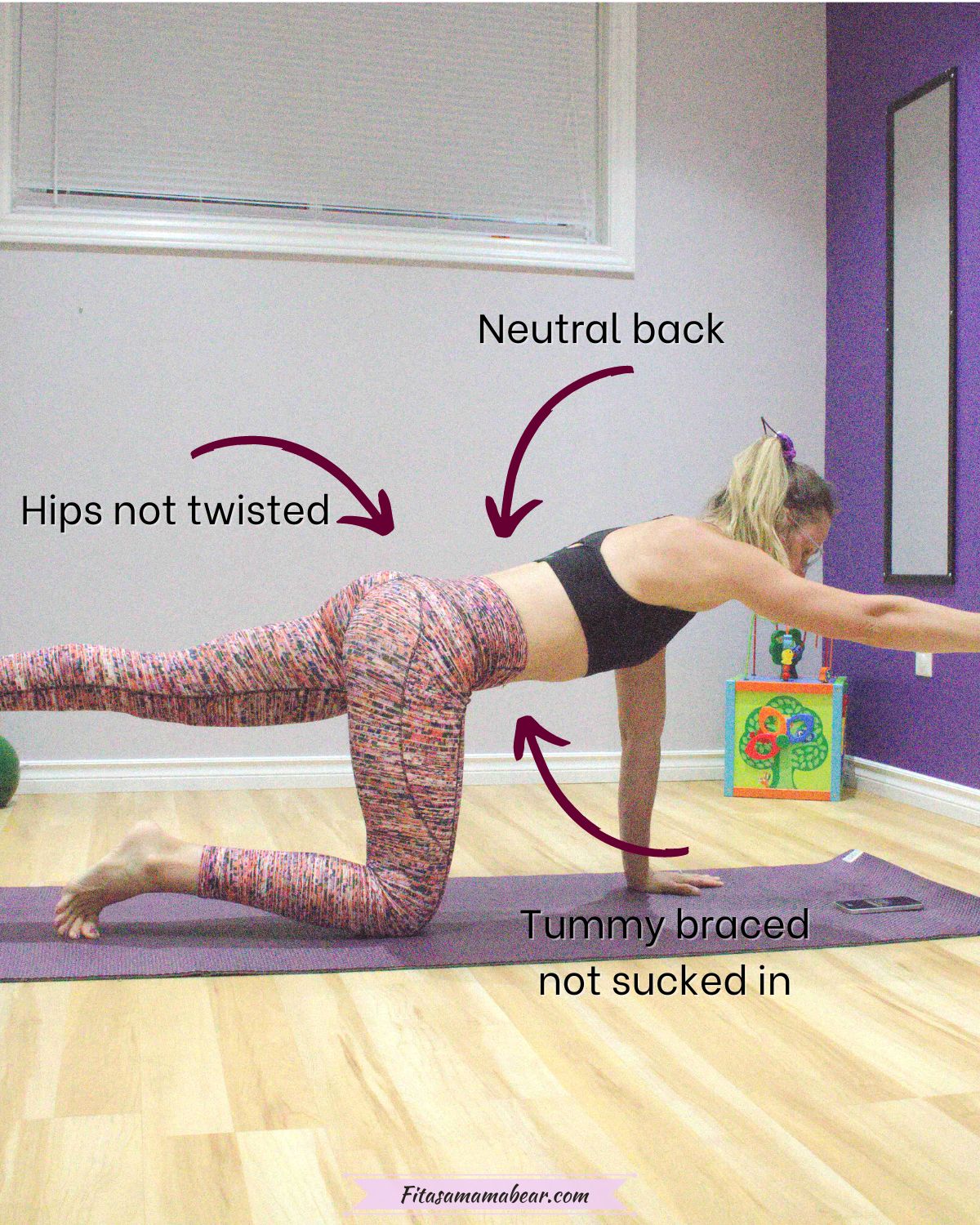
This plank alternative is similar to a deadbug exercise but reversed. It uses gravity against your and requires a lot of stability through the glutes to do it properly.
How to perform a bird dog:
- Come onto all fours and find a neutral back (not arched, not rounded, core engaged).
- Keeping the hips squared and facing the floor, extend the left leg and right arm away from the body slowly.
- Make sure not to arch the back.
- Return the left leg and opposite arm to the starting position and repeat the movement (keep to the same side for all repetitions before performing the ab exercise on the other side).
3. Eccentric Sit Up
Sit ups are a great exercise to target the abs in general. However, the eccentric component of a sit up requiresmore control. More control meansincreased strength.
If you’re having trouble with this one, especially if you’re feeling it in your hip flexors or your feet come off the floor,use a wall behind you as a marker instead of going all the way to the floor.
How to perform an eccentric sit up:
- Sit on the floor with your knees bent and close to your bum.
- Place your hands at your ears.
- Very slowly, begin to lower your back to the floor for a count of five.
- Once you reach the floor (your feet should still be on the floor), rollover and come back to the starting position.

4. Quadruped Holds
This is a fun one that opens up a lot of variations as well. There are also multiple parts to the exercise which is why it’s so great on the core.
How to perform a quadruped hold:
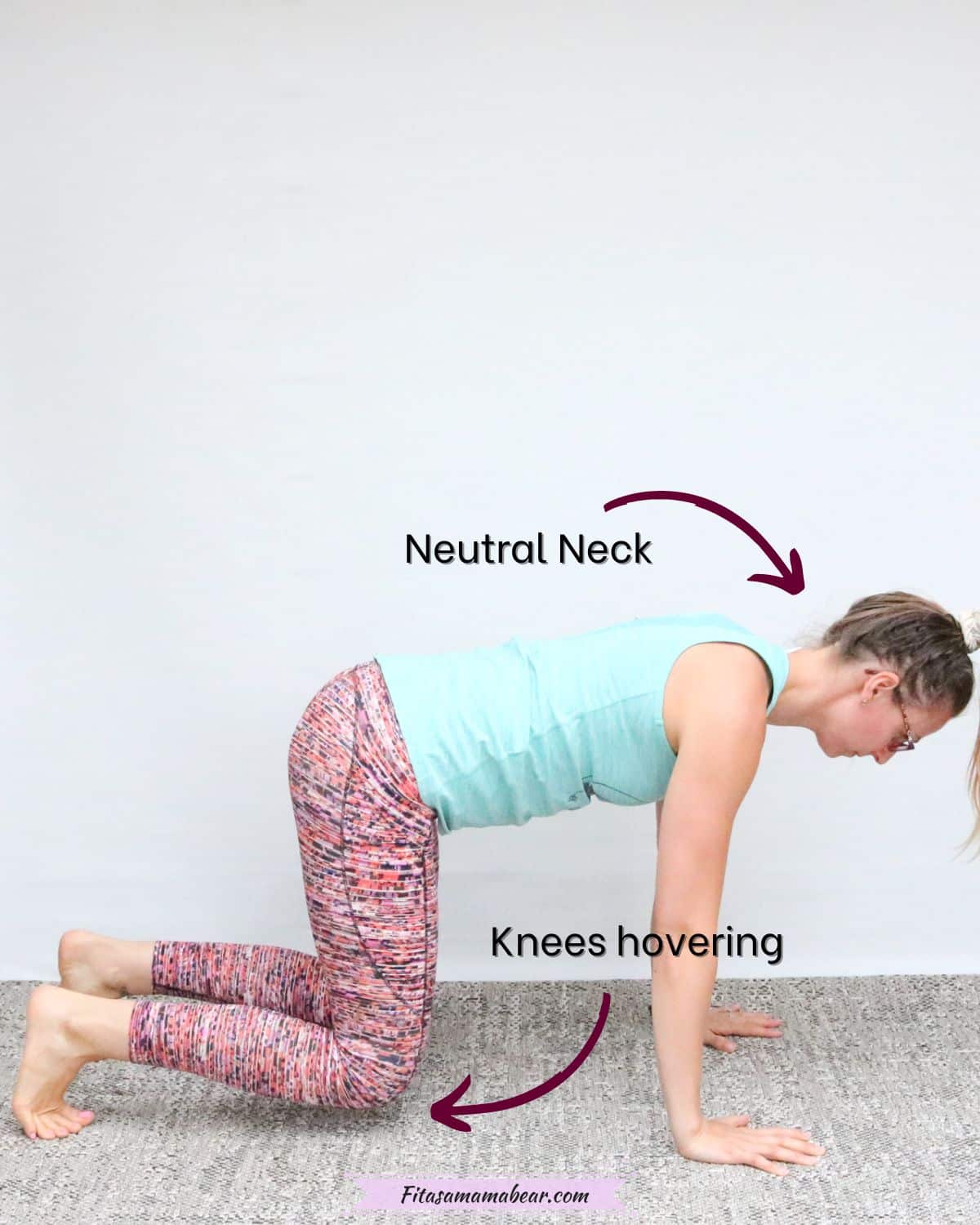
- Come into a table top position on all fours with the hands directly under the shoulders and the knees unde the hips.
- Curl the toes
- Take a deep breath and as you exhale, engage the core and lift the knees to a hovering position.
- Keep the neck and low back neutral. Hold.
- Release to the floor.
Once you’ve mastered holding the position for 30 seconds, you can move on to variations like quadruped abductions, bear crawls, and rows.
5. Pallof Press
The pallof press can be done in a variety of ways (standing, half kneeling, squatting, kneeling) and each one of them is an ideal way to target the entire core.
This is an anti-rotation exercise that targets one side of the body at a time. It can be done with a cable machine or a resistance band anchored to something.
How to perform a pallof press:
- Using a resistance band anchored to something and come into a standing position beside the anchor point with the band tight and held with both hands at chest height
- Keep a neutral body position
- Press the band away from the body
- Pause and resist the temptation to rotate towards the tension
- Return the band to the starting position at chest height and repeat.

6. Swiss Ball Pass
Essentially this is a moving deadbug but with a bigger item to hold. It uses a Swiss ball also known as an exercise ball. It’s tricky because it requires optimal engagement against a slight weight.
To perform the ab pass:
- Come into a deadbug position.
- Place the Swiss ball between your legs close to your feet.
- Extend the arms and legs away from the body while continuing to press the low back to the floor.
- Bring the arms and legs back toward the starting point as you pass the ball from the legs into the hands.
- Extend again.
- Continue to repeat the sequence and pass the ball.

7. Loaded Carry
Another plank alternative that can be done multiple ways: overhead, single-arm, bottoms up kettlebell, farmers carry, front-loaded). The point is the same: carry heavy things in an engaged position.
Loaded carries require all parts of your core to be firing as they hold you upright without twisting and turning, this is actually the case with kettlebells and why they can be so effective for core muscles too, check out this kettlebell weight loss workout.
Experiment with which kind of carry is best for you but begin with loaded farmers' carries (below) is normally best.
How to perform a loaded carry:
- Hold on to two heavy dumbbells, one at each side.
- Stand tall.
- Walk.
- Continue to walk while carrying the dumbbells and not rounding the back or leaning to one side.
8. Slider Crunch
For these crunches, you can use a pair of core sliders or socks on a hardwood floor. Both work. Know that the breakdown is for regular crunches but spider or oblique crunches are great too.
How to perform a slider crunch:
- Come into a high plank position on your hands with your arms extended right under your shoulders.
- Place your feet on core sliders.
- With the weight in your feet, inhale and then exale and bend the knees to drag the lower close to your nose.
- Pause and then push the feet back into the plank position.
If you want to make this more intense, do them on a pair of TRX suspension straps.

9. Pike
Similar to above, this can be done with core gliders, socks on a hardwood floor, or on TRX suspension straps.
The limiting factor here is normally hamstring flexibility though so know that ahead of time.
How to perform a pike:
- Come into a plank position on your hands with the body in a straight line from the shoulders to the hips.
- Place your feet on core sliders.
- Use your abs to lift the hips into the air as you drag your feet close to your face (keeping the legs straight).
- Pause and push back into the starting position without dropping the low back.

10. Windmills
Similar to above, this can be done with just bodyweight or by holding a light dumbbell if you want to increase the challenge.
The limiting factor here is usually hamstring flexibility and thoracic (upper back) mobility (though here are some thoracic mobility exercises to help with that), so don’t worry about going super low, focus on control.
- Stand with feet slightly wider than shoulder-width
- Turn one foot out slightly and keep the other planted
- Raise one arm overhead and keep your eyes on that hand
- Push your hips back as you reach the opposite hand toward the floor
- Keep your chest open and avoid rounding forward
- Go as low as your mobility allows, then return to standing with control
Want A Core That Actually Feels Strong?
If you’re tired of guessing which exercises to do (or avoiding ones that don’t feel good), that’s exactly what my programs are designed for.
6 Weeks to STRONG gives you simple, guided workouts that build real strength at home—without wasting time on exercises that don’t work for your body. Because core training shouldn’t feel frustrating—it should feel like progress.
Other Core Fitness Tips You’ll Love

Plank Alternatives FAQs
The deadbug exercise is almost more effective than a plank at strengthening the abdominal muscles an core as a whole. Not only is the deadbug a base move for many other ab exercises but it also teaches proper engagement of the lower abs. Similar to the plank, there are lots of ways to progress it as well.
Some great side plank alternative exercises are unilateral loaded carries, hip dips and raises, lateral oblique raise, and oblique crunches.
Core training can be done every other day, strategically. Either add in 1-2 plank alternatives to your current workout routine or create a 10-minute core workout and perform it 3-4 times per week with one day of rest between sessions.


Tracy says
I'm glad I found your post for these exercises. I am having a hysterectomy and realized I need to strengthen my core for better healing. I am working my way down the list.