

Strengthen your posterior chain to reduce pain, improve posture, and move better, especially postpartum. Posterior Chain Exercises target the muscles along the back of your body (glutes, hamstrings, and back) and are key for building strength, preventing injury, and supporting everyday movement.

A Quick Look At The Exercises
- 🎯 Best For: Reducing back pain and building strength for everyday mom life
- 💪 Exercises Included: 7 moves targeting glutes, hamstrings, and back
- 🏋️ Equipment Needed: Bodyweight, dumbbells, or bands, most moves scale either way
- 🔁 How To Use This: Aim for 3 posterior-chain exercises for every 1 you do for the front of the body
- ⏱️ Built-In Workout: A 15-minute posterior chain routine included ⭐
- Why You'll Love It: Real relief from back pain and easier day-to-day carrying and lifting
SUMMARIZE & SAVE THIS CONTENT ON
What Is The Posterior Chain?
The posterior chain refers to the muscles along the back side of your body.
This includes your glutes, hamstrings, upper back (traps and rear delts), and lower back. These muscles work together to support posture, movement, and overall strength.
Any exercise that targets these muscles is considered a posterior chain exercise.
Jump To
Why They Matter
Training the posterior chain exercises is one of the best things moms can work on.
The goal for most of my programs, like 6-weeks to STRONG is to roughly include three exercises for the back of the body for every one exercise we do for the front of the body.
Posterior chain exercises can help with the following:
- help hold you upright (properly!)
- they help reduce back pain
- having a strong posterior chain helps you carry kids easier
- they help you do the things you want to do, easier.
- reduce the risk of injury
Signs It's Weak
A weak posterior chain doesn’t always show up in obvious ways, but there are a few common signs.
You might notice back pain, poor posture, or that your glutes don’t seem to “turn on” during workouts (learn how to engage glutes). It can also feel like your legs fatigue quickly, or that everyday movements like bending, lifting, or carrying feel harder than they should.
The Best Posterior Chain Exercises At Home
The posterior exercises below are geared toward strengthening the posterior chain muscles and can mostly be done at home. Each exercise can be done with multiple variations (think changing your grip, stance, or tool) and pieces of home workout equipment.
Know that before you begin training the back of the body, you need to learn how to hip hinge. This movement alone is the basis for training the back of the body, especially for low back exercises.
Exercise #1: Glute Bridges
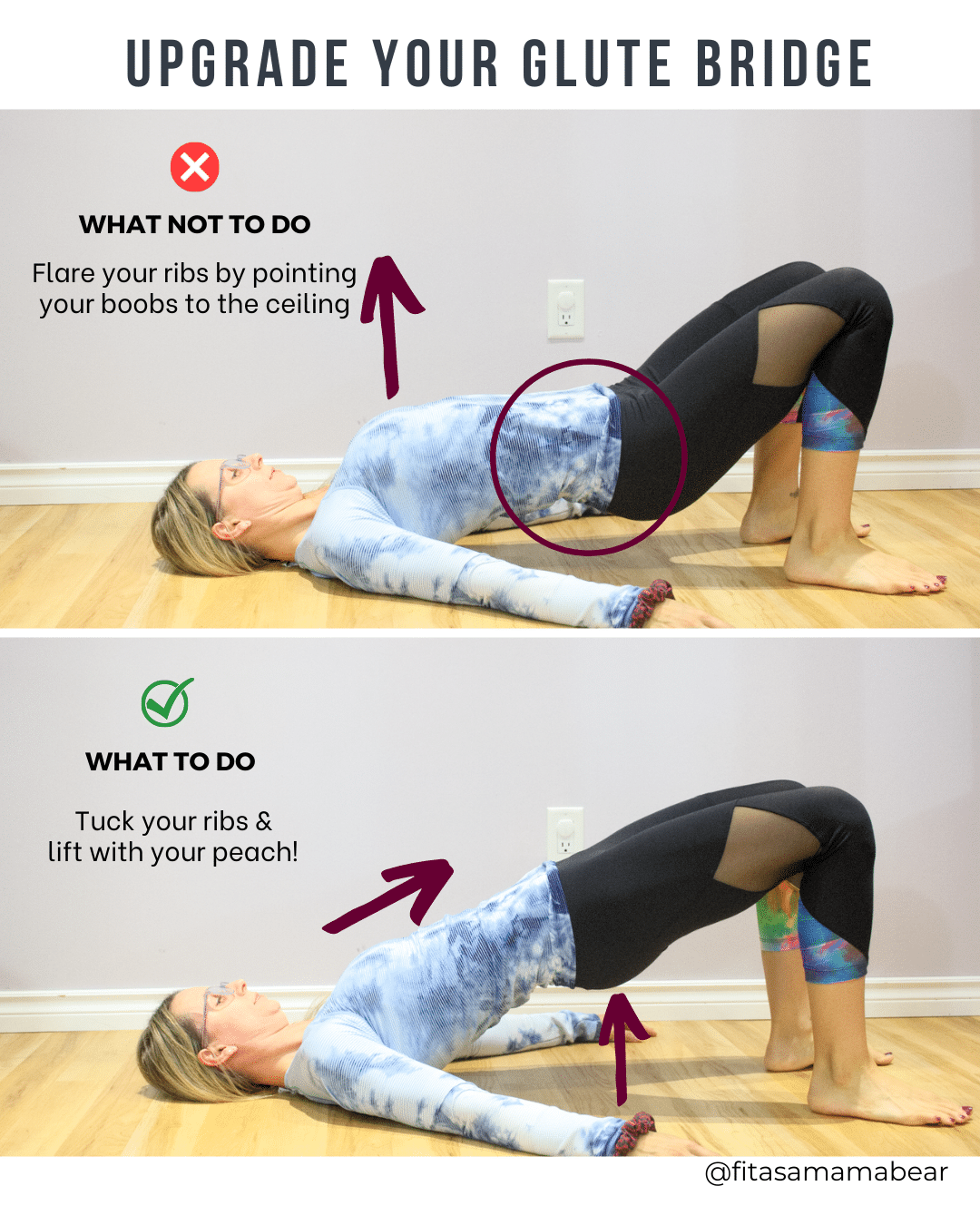
Glute bridges help teach engagement, and without engagement, you'll accomplish little.
You cannot progress if you don't understand how to lift your hips into hyperextension with your bum muscles and not your low back. These can be done bodyweight, with dumbbells, barbells, bands or unilaterally. Learn how to do a glute bridge correctly, and then check out more glute bridge variations.
Bridges (and glute training in general) are one of the best hip exercises for pregnancy and postpartum.
Exercise 2: Hip Thrust
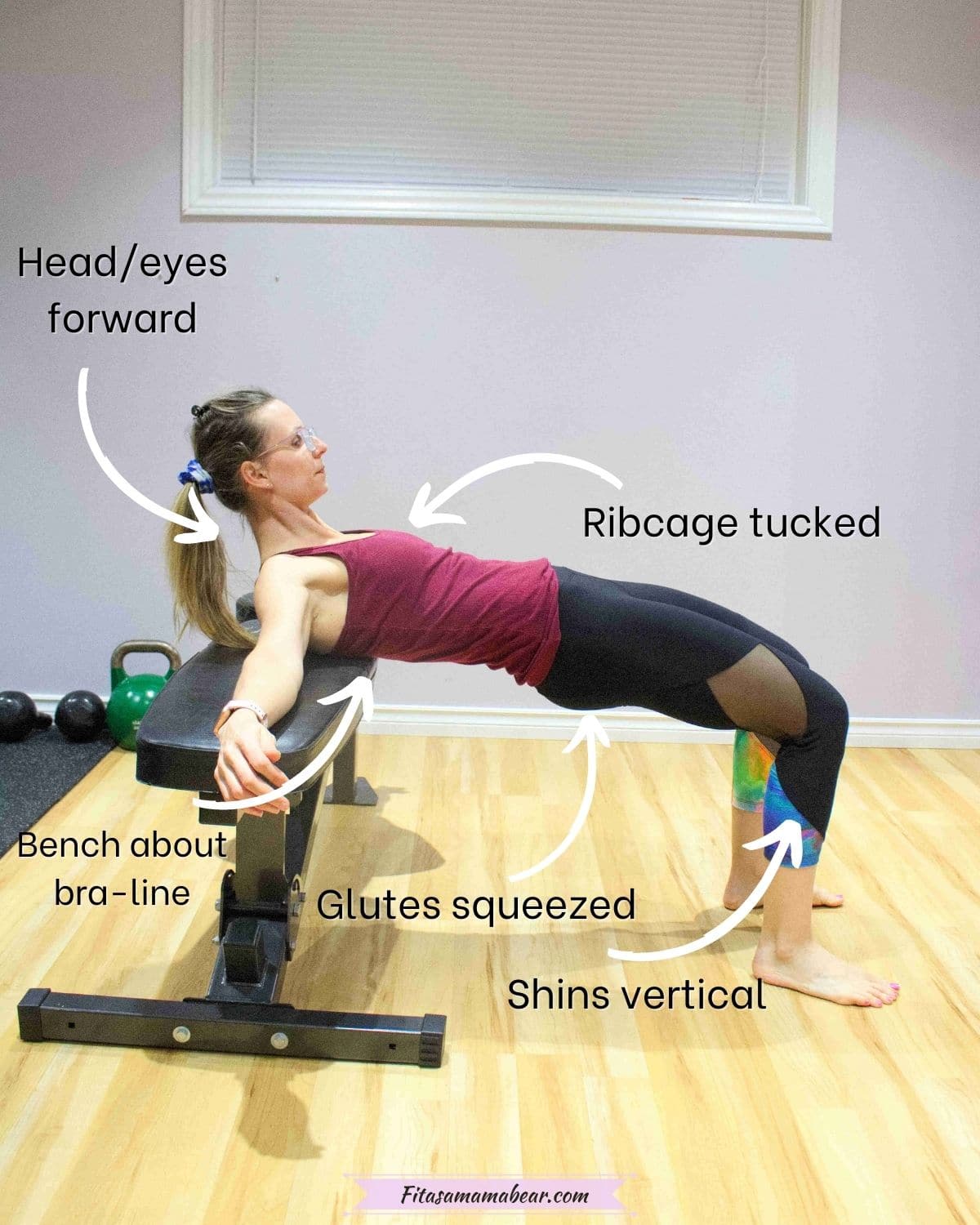
Like the bridge, the hip thrust can be done with just bodyweight, a band, barbell, dumbbell, a single leg.. the list goes on. Learn the basics of how to perform a hip thrust and then move on to variations like the single leg bridge.
This posterior chain exercise allows your glutes a bit more range of motion and thus you can hit them slightly harder. Whenever you're hoping to target the glute muscles (which should be always!) I find that mini bands + weights work insanely well, and it's actually one of my favorite glute exercises with dumbbells at home.
Exercise #3 Bentover Row (any row really!)
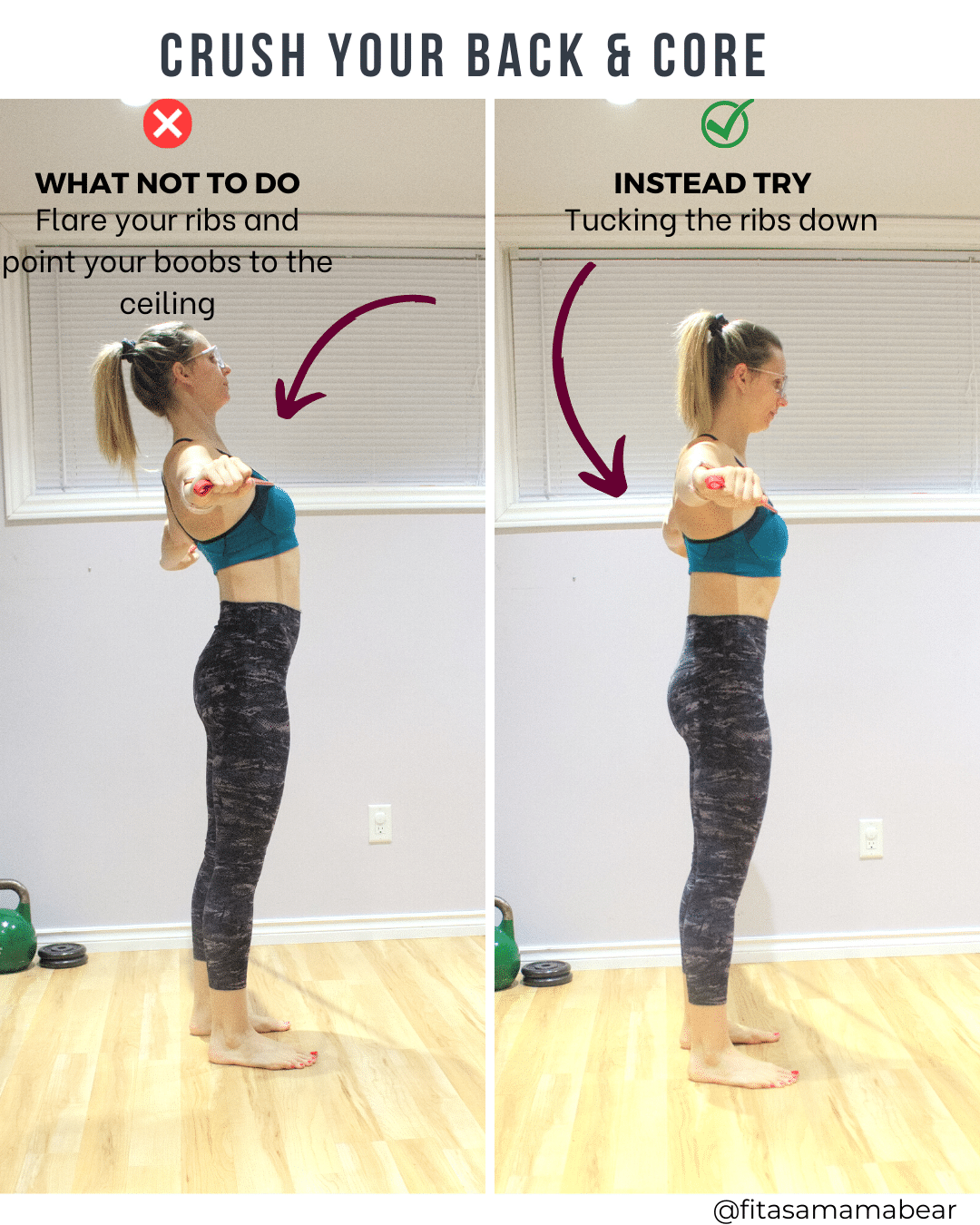
A great exercise to work the upper or mid-back posterior chain muscles (depending on your grip). Having a strong upper body (specifically a strong back) will help you stand more upright and remove some of the tension from your low back. These upper body stretches help too.
Learning to use your back muscles takes much of this strain off other areas. This is one of the best exercises you can do for better posture (all rows really).
Performing a dumbbell row, or a supported row is great too. Literally ANY kind of row is good.
Exercise #4 Romanian Deadlift
This exercise truly helps protect your back once you've mastered the hip hinge. Learn more about the benefits of deadlifts as well as functional strength training.
It puts your hamstrings into a lengthened position to target them (which is something we do a lot to pick up). It's why these hamstring exercises for runners are so important.
Here is a video demo of a dumbbell romanian deadlift but obviously it can be done with bands or even just your bodyweight too. By strengthening this exercise, your day-to-day tasks will be easier.

Exercise #5 Band Pull Aparts
A low-impact exercise I recommend to everyone as a full-on exercise or at least in their warm up. This posterior chain exercise can be done at home (or anywhere) and is great for your upper back and shoulder mobility.
Know that you can switch the grip (underhand, overhand, neutral) to change the impact slightly.
Exercise #6 Hamstring Bridges
The hamstrings are a big part of the posterior chain and often we complain about them being tight. But the truth is, they're commonly weak.
Performing hamstring bridges at home is a great way to strengthen them without any impact or weight. It's a wonderful exercise for beginners.
Exercise 7 Deficit Lunges
All lunge variations can help strengthen the posterior chain. However, deficit lunges are geared more towards the back of the legs and glutes.
Adding a step provides a great range of motion to target them even more. And don't think that you need the dumbbell, just your body can have a huge impact.
Posterior Chain Workout
Below is a 15-minute workout you can do at home that focuses on posterior exercises.
| 1 Arm Row | 8/arm |
| Romanian Deadlift | 10 |
| Rest | 40 seconds x3 sets |
| Face Pull | 10 |
| Single Leg Elevated Glute Bridge | 10/leg |
| Rest | 30 seconds x2 sets |
| Bridge Walkout | 30 seconds |
Start by completing the first two exercises back-to-back. Then rest for 40 seconds and repeat for 3 sets.
Next, move to the following two exercises, performing them back-to-back. Rest for 30 seconds and repeat for 2 sets.
Finish with the bridge walkouts for time.
Common Mistakes
One of the biggest mistakes is relying too much on your quads instead of actually using your glutes and hamstrings (learn more about glute exercise benefits and why you want the focus there).
Rushing through reps, using too little resistance, or skipping proper form (like not hinging at the hips) can also limit your results.
Focus on control, feel the right muscles working, and don’t be afraid to challenge yourself.
If you’re not sure how to put all of this together into a plan, 6 Weeks to STRONG walks you through short, effective workouts that build full-body strength, without the guesswork.
Other Fitness Tips To Help Your Goals


Posterior Chain Exercises FAQs
Posterior chain exercises are exercises that target muscles along the back of the body. This includes the hamstrings, lats, glutes, lower back muscles, rear delts, and more.
Begin by learning how to hip hinge and glute bridge properly, as those are the basics and most low-impact options. From there, work in some posterior chain exercises like rows, hip thrusts, and deadlifts into your training program in some variation.
Yes, you can effectively train your posterior chain at home with minimal equipment. As long as you’re using enough resistance and progressing over time, you can build strength just as effectively at home.
When it comes to the upper body you want to focus on the upper, mid, and lower back muscles like the lats, rhomboid, the erector spinae, serratus muscles, and the rear deltoids. These are just some of the upper body muscles included.
Mostly daily habits like sitting, leaning forward, and carrying kids, shift you out of alignment and underuse the back of your body.
Pregnancy and postpartum changes add to this, and focusing only on front-body exercises (like squats and push-ups) can make the imbalance worse.



Fiona @ Get Fit Fiona says
Deadlifts and glute bridges are two of my favorite exercises to use with clients. Like you said, with so much time spent sitting throughout the day, it's important to make sure you're working the posterior chain to balance it out.
fitasamamabear says
Yes! I adore deadlifts- they make me feel like a bada** haha but the same with my clients- it's so so necessary to focus on the back of the body muscles. It makes a huge difference in daily life.