

Skyrocket your glute gains with this glute hypertrophy workout! With an emphasis on moderate weight and medium to high volume, this glute training plan can be done at home or in the gym. So, set aside 20 minutes a few times per week and get started!

A Quick Look At The Workout
- 💭Equipment: Dumbbells and a Mini band
- ⏲️Duration: 20 Minutes
- 📖 Warm up: 5-Minute Leg Day Warm Up (optional)
- 📋Intensity: Beginner-friendly
- 📖 Frequency: Do this workout 2-3 times per week.
- ⭐ Muscles used: You'll be primarily focusing on the three gluteal muscles, but muscles of the legs and core will come in.
SUMMARIZE & SAVE THIS CONTENT ON
What Is Glute Hypertrophy?
Glute hypertrophy means building the size of your glute muscles.
Your glutes are a group of muscles around your hips and bum, the glute max (the largest), along with the glute med and min on the outside of your hips. When trained properly, they help with posture, stability, and even reduce back pain. You can learn more about the benefits of glute training or try some of the best glute burnout exercises to feel them working.
Hypertrophy happens when you challenge these muscles with enough resistance and repeat that over time, so they adapt and grow.
Jump To
What Size Dumbbells Do I Need?
A set of dumbbells that is challenging but not crippling is what you need and keep in mind the volume is high. I’d recommend starting with a set of 15 pounds of this workout and scaling from there. It's a good start for all glute exercises with dumbbells at home.
Likewise, for the resistance band, opt for one of the stronger latex ones. This way you get a good amount of tension without sacrificing form. This is what I recommend for gluteus minimus exercises, too.

Glute Hypertrophy Workout
A hypertrophy workout focuses on building muscle size by using effective glute exercises.
The best part? You can do it at home or in the gym with just dumbbells and a mini band (just like this upper glute workout). This is the same simple setup I use in my 6 Weeks to Strong workouts because it's so effective.
Before you begin, make sure that you have mastered how to engage your glutes. Without proper activation, you won’t maximize hypertrophy. Focus on FEELING and not rushing through (learn more about glute training). And of course, at the end of the workout, rock some glute stretches to ease up the tension.
| Banded Dumbbell Curtsy Lunges | 45 seconds alternating |
| Dumbbell Feet Elevated Glute Bridge | 20 |
| Side Lying Hip Raise | 10/side |
| Rest | 30 seconds x 3 sets |
| Glute Squat | 12 |
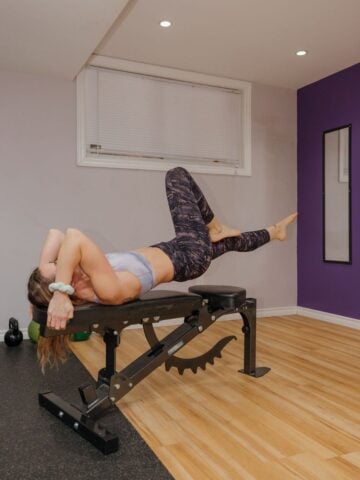
| Reverse Hyperextension | 20 |
| Rest | 10 seconds x 4 sets |
To perform the workout: Perform the first three exercises back-to-back with no rest. After the hip raises, rest 30 seconds and repeat for 3 rounds.
Then move to the final two exercises, performing them back-to-back. Rest 10 seconds and repeat for 4 rounds. Perform the workout 2-3 times per week.
The Glute Exercises
Make sure you’re clear on the form before you begin so that you’re not just going through the motions.
Aim for coming just shy of failure on both the curtsy lunges and the glute squats. Then, balance it out with some quad exercises at home on your next leg day.
Banded Curtsy Lunge
The curtsy lunge is a great exercise as it targets all areas of the glutes at once. Adding a mini resistance band places extra tension on the gluteus medius and minimus and the dumbbell weights the gluteus maximus.
- Stand upright in a comfortable position with a mini band wrapped around the legs above or below the knees.
- Step the left foot back and across the line of the left leg.
- Lower the knee toward the floor while hinging slightly at the hips. Keep the foot of the right leg fully on the floor.
- Push through the right foot and return the left foot back to the starting position.
Cue: Step back and across, then drive through your front heel to feel your glutes work.

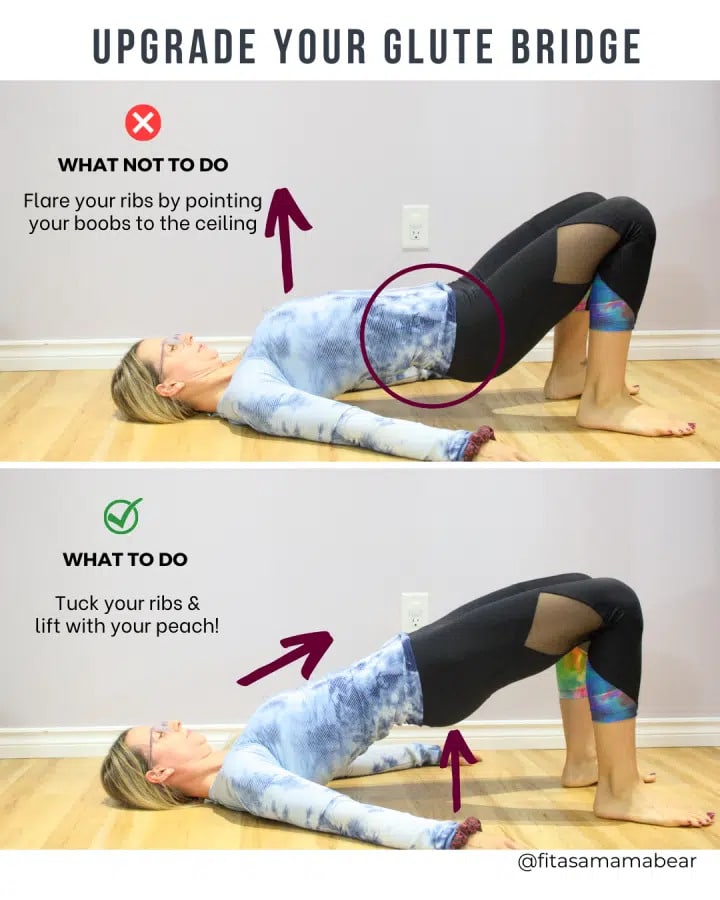
Dumbbell Glute Bridge
Adding a mini elevation to the glute bridge makes it so that you have a greater range of motion and thus, more chance to target the glutes. Make sure to keep the heels fully planted.
- Lying on your back, bend your knees and bring your heels close to your bum. Feet shoulder-width apart roughly.
- Push through your heels and lift your hips by squeezing the glutes. Do not excessively arch the lower back.
- Pause at the top for a second seconds with a maximum glute squeeze before releasing the tension and bringing the hips back to the starting position.
Know that if you're rocking this glute workout in a gym, you can substitute this exercise for a barbell hip thrust. The hip thrust is one of the "kings" of all glute exercises and would be a great addition (some people call it a bench glute bridge, but its actual name is a hip thrust).
Cue: Push through your heels and lift your hips, squeezing your glutes hard at the top.
Side Lying Hip Raise
A great exercise for core strength and glute strength. Though it does have a lot of moving parts, nailing down the movement is a great way to challenge stability.
- Lay on your right side with your knees bent and feet together. Hips and shoulders in one line and the right arm under the right shoulder.
- Place a mini resistance band around your legs above the knees.
- As you raise up into the side plank position and lift the hips off the ground, raise the left leg up using the left glute. Keep the knee bent and flex the left foot. Pause and return to the starting position.
Keep your hips stacked and lift using your glute, not by rolling backward.

Glute Squat Exercise
This type of squat places an extra emphasis on the glutes by hinging forward slightly. Really squeeze the glutes as you come up.
- Stand upright with your feet wider than hip distance apart holding a dumbbell at chest height.
- Hinge forward and push the weight back slightly as you bend the knees and drop into a bottom squat position.
- Push through the heels, drive the knees out, and extend upwards while still keeping a light forward lean.
- Squeeze the glutes at the top and repeat.
Sit back into your hips, feeling a bit of a stretch, and give the glutes a big squeeze at the top.
Reverse Hyperextensions
Though this glute exercise can be done on a machine at the gym, it can just as easily be done at home on your couch or a table as well, watch this reverse hyperextension video. And if that doesn’t suit you, opt for this modified reverse hyperextension instead.
- Lay your belly down on a bench with the end of the bench at your hips (legs hanging off).
- You can do this with straight legs or bent knees. Squeeze your glutes so that your legs raise up and your hips extend (go from bent to open). Pause and return the feet to the floor.
Cue: Lift your legs using your glutes while keeping your lower back stable.

How To Hypertrophy Glutes
Glute growth comes down to a few key things, and none of them are complicated.
You need to challenge your muscles with enough resistance, progressively make your workouts harder over time, and stay consistent with it. Remember, aim to just shy of failure. This is key and why glute finishers are so helpful.
You also need to be eating to grow.
If you’re not fueling your body properly, your muscles won’t have what they need to build. Learn how to grow glutes in 6 steps.
How To Make This Workout Harder
If this workout starts to feel easier, don’t add more; just make it harder.
Slow your reps down, add a pause at the top of each movement, increase resistance, or shorten your rest time.
Small changes like these keep your glutes challenged, and that’s what drives results. Learn more about how to make workouts more intense at home.
If you want to take it further, my Glute Guide for Moms walks you through exactly how to build stronger glutes at home with simple, structured workouts, so you’re not guessing what to do next.

Glute Hypertrophy FAQs
Growing glutes requires a balance of heavy compound glute work like deadlifts and hip thrusts, along with smaller, high-volume exercises in your training session. In addition to that, glutes will not grow as well if you’re consistently in a calorie deficit. For muscle mass to develop, you need to eat to gain.
Growing your glutes is different for everyone and requires consistent effort. If you stay dedicated to your plan, your glutes will become stronger in six weeks, start changing shape in ten weeks, and keep growing from there. Optimal glute growth can take anywhere from eight months to sixteen months of solid effort.
Glutes will stagnate in their growth due to a few things. Most commonly, you’re not eating enough to support muscle growth. From there, it comes down to training, lifting too light, rushing reps, feeling it in your quads instead of your glutes, or not following a consistent plan.
To grow your glutes, you need enough food, progressive overload, and proper glute-focused training.
To grow your glutes, you should train them 3 times per week. Glutes tend to recover well and can handle higher volume. Three times per week gives your glutes enough stimulus to grow while still allowing time to recover. Just make sure you’re training with enough resistance and progressing over time.



Leave a Reply