


Postpartum Back Exercises can help reduce pain, improve posture, and rebuild strength after pregnancy. Between feeding, carrying, and constantly being hunched over, it’s no surprise your back feels stiff and achy. These low-impact exercises were made to help you gain more movement and reduce discomfort.

A Quick Look At The Exercises
- 🎯 Best For: Relieving postpartum back pain from feeding, carrying, and hunching forward
- 💪 Exercises Included: 7 gentle, bodyweight moves for posture and core support
- 🏋️ Equipment Needed: None, just floor space (a ball or block helps for one move)
- ⏱️ Time Needed: About 5-6 minutes as a daily circuit
- 🔁 How To Use This: Move slowly, focus on breathing, stop if anything hurts
- ⭐ Why You'll Love It: Real relief for the aches that come with new-mom life
SUMMARIZE & SAVE THIS CONTENT ON
One of the biggest reasons postpartum back pain sticks around is that your core and posture haven’t fully recovered yet.
Between feeding, carrying, and constantly being hunched forward, your back ends up doing more work than it should (which is where these breastfeeding stretches come in). That’s why pairing simple strengthening exercises with gentle movement, like corrective exercises for diastasis recti, can make a big difference.
And if you’re feeling stiff or tight, adding in a bit of daily mobility work (like my Mobility Made Simple program) can help you move better and reduce tension faster.
Jump To
Causes Of Postpartum Back Pain
Much of the time, when it comes to niggling back pain in new moms, it’s caused by a combination of the following:
- Poor posture (from breastfeeding, carrying, and sleeping with a babe)
- Weak abdominals and some diastasis recti
- Loose ligaments leftover from pregnancy.
The Best Postpartum Back Exercises
Because postpartum back pain has multiple causes, these exercises focus on building strength and improving mobility, especially in tight areas like the upper back.
All of them are simple bodyweight movements you can use daily as a quick circuit (about 5–6 minutes) or add into your current routine.
These exercises focus on gentle core engagement, posture, and strengthening the muscles that support your spine. So, move slowly, focus on breathing, and stop if anything feels painful.
1. Pelvic Tilt
- Lay on the floor on your back with your feet flat and close to your bum.
- Think of lifting up the lower half of your bum so you feel as if you're drawing your belly button into the floor
- Think of tucking your pelvis under or bringing your hip bones towards your ribcage.
- Your upper body shouldn't move, you are simply tilting your pelvic to stabilize.
- Hold 5-10s
- Release fully
Reps: 8-10 repetitions.

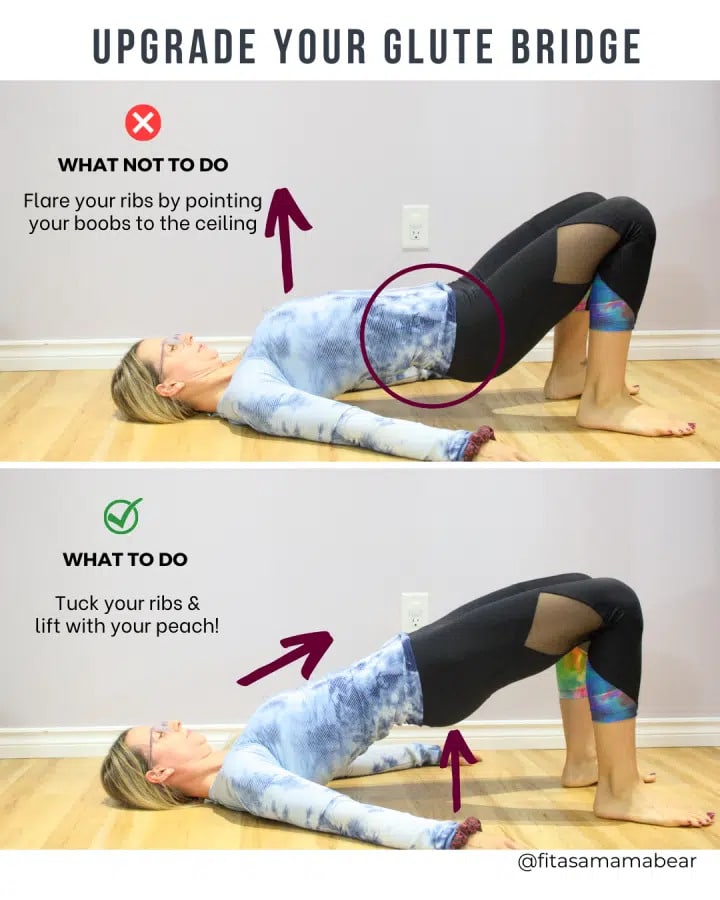
2. Paused Glute Bridge
- Lying on your back, bend your knees and bring your heels close to your bum. Feet shoulder-width apart roughly.
- Push through your heels and lift your hips by squeezing the glutes. Do not excessively arch the lower back.
- Pause at the top for three seconds with a maximum glute squeeze before releasing the tension and bringing the hips back to the starting position.
Reps: Anywhere from 8-25 repetitions.
3. Thread The Needle
This move can be done from a tabletop position (all fours) or a child's pose position.
- Come into a table top position on your hands and knees.
- Take your right arm and thread it through the gap between your legs and left arm.
- Place the right shoulder on the floor and look to the left. Pause.
- Twist from your upper back and not your lower back so that you feel the stretch in the back of your right shoulder.
- Bring the arm back up toward the ceiling and repeat.
Use the floor as resistance to twist from the upper back while keeping the hips squared so that the low back is not twisting.
Reps: 10 repetitions on each side.

4. Wall Pulses
- Stand a foot away from the wall and place your palms flat on the wall at head height.
- As you lean forward, keeping your low back locked in, press your chest toward the floor and sink the heels down.
- Do not arch the low back. Aim to extend the upper back and feel a stretch in the underarms.
- Come back up to the starting position and repeat.
Reps: 12 repetitions

5. Bridge With Adductor Squeeze
- Lay on your back with the knees bent close to your bum. Place a ball or block between your knees.
- Tuck the ribs down and the hips towards the ribs so that your low back is on the ground.
- Use your bum muscles to raise the hips towards the ceiling. While you do this, squeeze the ball slightly so you feel your inner thighs fire up. release the squeeze and return to the starting position.
Reps: 10 repetitions
6. Clamshells
- Lay on your right side with your legs stacked and knees slightly bent. Make sure your shoulders, hips, and heels are in one line.
- Place your top hand on your top hip. Keeping your heels together, squeeze your glute while opening up at the knees.
- Release the squeeze and return the knees to meet each other. You should feel the muscles under your hand contract.
reps: 10-15/side

7. Long Lever Glute Bridge
- Lay on your back with your legs straight out (knees slightly )bent.
- Walk your feet out until your knees are wider than a 90-degree angle.
- Posteriorly tilt the pelvis, press into the heels, and lift your bum off the floor.
- Pause and release the engagement to lower back to the ground.
Reps: 10-15 repetitions

Common Mistakes and Easy Fixes
A lot of postpartum back pain comes down to small habits that add up over time.
- Jumping into intense workouts too soon
- Skipping core engagement
- Poor posture when feeding or carrying
Instead, focus on simple daily adjustments like bringing the baby toward you (don't hunch forward), use pillow to support when feeding, and mastering the hip hinge for picking up.
These small changes can make a big difference in reducing strain on your back.
If you’re feeling stiff or tight, adding a bit of daily movement can help even more. My Mobility Made Simple program is designed to loosen up those “stuck” areas and help you move (and feel) better without adding more stress to your day.
More Postpartum Resources For Moms
Your next steps in postpartum recovery should be about continuing core strengthening exercises (after you've mastered engagement).
You'll also want to start glute training at home so that you can carry kids easier (check out the best mom workout to get you started too!).
Lastly, learn how to make a busy mom workout schedule and use some yoga modifications as your postpartum body shifts and shapes!



Postpartum Back Pain FAQs
Postpartum back pain is normally a combination of weak abdominals (diastasis recti) and poor posture. Work in proper alignment and breathing patterns before progressing to diastsiis recti and glute exercises to help support the spinal column and pelvis.
Low-impact postpartum back exercises and stretches can be done 5-7 times per week. Not only do they help reinforce good movement patterns but most of them help open up the upper back, which is crucial for moms breastfeeding or carrying a babe all day.



Leave a Reply